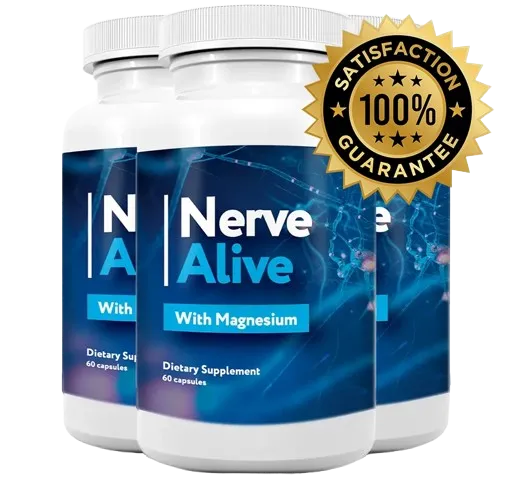
Is This Just Another Nerve Supplement,
or Something Different?

Nerve Alive Reviews 2026
If you’ve been dealing with nerve discomfort, tingling, or that constant “pins and needles” feeling that comes and goes, you already know how frustrating it is to try different solutions… and still not feel consistent relief. That’s exactly why Nerve Alive has been getting attention lately. In this review, I’ll break down what it actually does, what’s inside, and whether it’s worth considering based on real-world expectations, not just marketing claims.
Nerve Alive is a supplement formulated with ingredients like Alpha-Lipoic Acid, Benfotiamine, and B vitamins, all commonly associated with nerve support and circulation. But here’s the reality, having solid ingredients on paper doesn’t always translate into real results.
Some users report noticeable improvements in discomfort and sensitivity… while others say the effects are minimal or take longer than expected. So the real question is: is Nerve Alive actually worth trying, or just another supplement that sounds better than it performs? Let’s take a closer look.
What is Nerve Alive?
Nerve Alive is a supplement positioned around supporting nerve health, especially in cases involving tingling, numbness, or ongoing discomfort often linked to neuropathy.
The formula brings together a mix of ingredients commonly associated with nerve function, such as antioxidants and nutrients tied to nerve repair and signaling. It follows a fairly typical approach for this category, focusing more on nutritional support than on fast symptom relief, which, in practice, tends to require consistency over time.
It’s also manufactured in GMP-certified facilities and tested by third-party labs, which points to standard quality control, although that’s not exactly unique in this space.
What makes it somewhat interesting is the attempt to address multiple factors at once, from oxidative stress to circulation, instead of focusing on a single pathway. Still, that raises a more practical question: does this kind of broad approach actually translate into noticeable results?
How Does Nerve Alive Work?
From what I’ve seen testing it and reading user feedback, Nerve Alive follows a pretty standard approach for nerve support. The idea is to reduce stress on the nerves, support their function, and improve circulation over time. Nothing unusual, but the logic makes sense.
What stands out is timing. The people who notice changes usually describe them as gradual, not immediate, often after a few weeks of consistent use. At the same time, results aren’t identical for everyone. Some report clear improvements in daily discomfort, while others say the effects are more subtle.
Overall, it feels like one of those products where the approach is solid, but the outcome depends a lot on the person, especially consistency and expectations.
How We Researched & Rated Nerve Alive
To evaluate Nerve Alive, I looked at three main things, the formula itself, available research on similar ingredients, and real user feedback over time. Instead of relying only on brand claims, I focused on longer-term reviews (around 60–90 days), since nerve support isn’t something that tends to show immediate results.
I also compared the formula with what’s commonly used in similar supplements, to see if anything stood out, or if it followed the usual pattern. The ratings below reflect that mix, ingredient quality, consistency of feedback, and overall value, not just marketing claims.
Nerve Alive Ingredients (What’s Inside & Why It Matters)
Nerve Alive combines a selection of well-researched ingredients commonly associated with nerve health and overall neurological support.
Alpha-Lipoic Acid (600 mg): Often studied for its antioxidant properties and its potential role in supporting nerve function. Some research suggests it may help reduce oxidative stress linked to nerve discomfort.
Benfotiamine (Vitamin B1): A more bioavailable form of thiamine that is frequently associated with supporting nerve health, particularly in cases linked to blood sugar imbalances.
Acetyl-L-Carnitine: Commonly linked to cellular energy production and often studied for its potential role in supporting nerve regeneration and overall nerve function.
Vitamin B12 (Methylcobalamin): An active form of B12 that plays a key role in maintaining the myelin sheath, which is essential for proper nerve signaling.
Vitamin B6: Involved in the production of neurotransmitters and often associated with maintaining healthy nerve communication.
Magnesium Glycinate: A well-absorbed form of magnesium that may help support normal nerve signaling and muscle relaxation.
Turmeric Extract (Curcumin): Known for its anti-inflammatory properties and commonly studied for its potential role in supporting overall nerve health.
Coenzyme Q10 (CoQ10): Plays a role in cellular energy production and is often linked to supporting healthy cell function, including nerve cells.
In simple terms, the formula uses clean-sourced components, produced under quality-controlled standards, and designed to work together rather than relying on a single compound.

Benefits of Nerve Alive
Looking at the formula more carefully, a few things stand out, not necessarily as breakthroughs, but as pieces that could make a difference depending on the context.
May Help Reduce Nerve Discomfort:
This is probably the most immediate expectation. The ingredients are commonly linked to easing sensations like tingling, burning, and sharper nerve pain. Some people mention noticing small improvements after a few weeks, although it doesn’t seem to be the kind of thing that flips overnight, more like a gradual shift, if it happens.
Supports Nerve Signal Function:
The presence of B vitamins caught my attention here. They’re often associated with nerve communication and maintenance, especially when there’s some level of deficiency involved. If that’s not the case, the impact might still be there, just less noticeable.
Provides Antioxidant Protection:
This is one of those benefits that makes sense the more you think about it. Oxidative stress is frequently mentioned in relation to nerve issues, so supporting the body on that level feels relevant. At the same time, it’s not something you directly feel, it’s more of a long game.
May Improve Circulation to Nerve Tissue:
There are ingredients aimed at supporting blood flow, which in theory helps with nutrient delivery and waste removal. It sounds good on paper, but realistically, this tends to fall into the category of subtle, background effects rather than something obvious day to day.
Supports Gradual Nerve Recovery:
One thing that becomes clear is that this isn’t positioned as a quick fix, and honestly, that part feels more realistic. Nerve-related issues usually take time, so the idea here seems to be consistent support rather than immediate relief. Whether that aligns with what someone expects is another question.

Pros and Cons of Nerve Alive


Nerve Alive Reviews and Feedback

Took a couple of weeks to notice anything
At first, I wasn’t sure if it was doing much. The tingling in my hands and feet was still there during the first week. But around the second week, I started noticing less discomfort, especially at night. It wasn’t a dramatic change, but enough to help me sleep better.

Not a miracle, but it helped over time
I went into this with low expectations. After about two weeks, the constant tingling started to calm down a bit. It didn’t completely go away, but it became more manageable. I’d say it’s more of a gradual improvement than a quick fix.

Subtle, but noticeable if you stick with it
I’ve tried a few things for nerve discomfort before, and most didn’t do much. With this one, I noticed small improvements after a few weeks, less burning sensation and slightly better sleep. Nothing life-changing, but enough that I kept using it.
So, what’s the overall pattern?
Across hundreds of user experiences, the feedback tends to follow a few common points:
- Results usually start appearing after 2–3 weeks
- Improvements are gradual, not immediate
- Works better with consistent daily use
- Some users report better sleep and reduced tingling
- A few complaints mention shipping delays or slow customer support
Overall, most people don’t describe Nerve Alive as a “quick solution,” but rather something that may support nerve comfort over time with regular use. That kind of slower, steady effect tends to align more with how these types of supplements generally work.
How to Use Nerve Alive?
If you look at the official directions, it’s pretty straightforward: two capsules a day, preferably in the morning with food. Nothing unusual there.
What I’ve noticed, though, is that the timing itself doesn’t seem to be the deciding factor, consistency does. People who take it sporadically don’t report much. The ones who stick with it daily for a few weeks are the ones who start noticing small changes.
Taking it with food does make sense, especially if you’re sensitive. Some of the ingredients (like B vitamins and amino acids) can feel a bit harsh on an empty stomach. Morning use is usually recommended, but not because it’s “magical”, mostly because it’s easier to turn into a habit.
One thing that’s often mentioned is the idea of cycling (like 90 days on, short break, then restart). To be honest, there’s no strong evidence that this is necessary, but some people prefer doing it as a way to reassess how they feel without the supplement.
As for combinations, a decent breakfast probably helps more than any “optimization trick.” There’s also the usual advice about avoiding alcohol right after taking it, which is reasonable, especially considering how alcohol interacts with nutrient absorption.
Bottom line, there’s no perfect protocol here. It’s more about taking it regularly, paying attention to how your body responds, and adjusting if needed.
And of course, if you’re on medication or dealing with a specific condition, it’s worth checking with a professional before starting anything new. Not because this is unusual, but because that’s just the safe way to approach any supplement.
Potential Side Effects & Safety Considerations
One thing I always look at before recommending any supplement is how people actually react to it in real life, not just what the label says. With Nerve Alive, most users seem to tolerate it well, especially when taken with food. That said, a small number of people report mild discomfort in the first few days, things like slight nausea or a light headache. In most cases, this goes away as the body adjusts. If that happens, a simple trick is to start with a lower dose for a few days instead of jumping straight into the full serving.
On the other hand, if you notice anything more serious, like skin irritation or signs of an allergic reaction, it’s important to stop immediately and speak with a healthcare professional.
Another point that often gets overlooked, this formula contains active compounds that may interact with certain medications, especially blood thinners, antidepressants, or beta blockers. If you’re currently taking any of these, it’s worth double-checking with your doctor before starting.
In short, for healthy adults, it appears to be safe when used correctly, but like any supplement that actually does something, it’s not something to take blindly.
Where to Buy Nerve Alive
This part matters more than most people think.
I’ve seen cases where people tried to save a few bucks buying supplements from random marketplaces… and ended up with products that didn’t work at all, or worse, something that didn’t even match the original formula.
With Nerve Alive, the safest option is still the official website. That’s where you know you’re getting the exact formula, properly stored, and not something that’s been sitting in a warehouse for months or repackaged by a third-party seller.
Another reason I prefer buying direct is the refund policy. If you try it and it doesn’t work for you, you actually have a clear way to get your money back, which usually isn’t the case with unofficial sellers.
So while you might find it elsewhere, that’s one of those situations where cutting corners can backfire.
How to Order (Quick Walkthrough):
- Go to the official Nerve Alive website
- Choose the package that makes sense (most people go for 3 or 6 bottles for better value)
- Fill in your details and complete the checkout
That’s it, the whole process takes just a couple of minutes.
Nerve Alive Price, Discounts & Deals
The pricing structure is pretty straightforward, but how you choose here actually makes a difference.
The lowest price per bottle drops to $49, but only if you go for the 6-bottle package. That’s why most people who are serious about results tend to choose that option instead of starting small and paying more later.
Here’s how it currently breaks down:
One thing worth pointing out, most supplements like this don’t show noticeable results overnight. That’s why shorter plans can end up being more expensive in the long run if you need to reorder.
All packages come with a 60-day money-back guarantee, so there’s a safety net if it doesn’t work for you.
And just to be clear, this discounted pricing (especially the $49 per bottle) is typically only available through the official website, not through third-party sellers.
Is Nerve Alive Safe to Use?
Safety was honestly one of my main concerns before trying Nerve Alive. There are a lot of supplements out there that look good on paper but don’t always follow through in practice.
From what I found, Nerve Alive is produced in GMP-certified facilities and goes through third-party testing, which is a good baseline for quality. The ingredient list is fully disclosed, and there are no obvious red flags like hidden blends or questionable additives, something I always check before using anything long-term.
That said, it’s still a supplement, not a magic fix. Most people who report good results are consistent with the daily dose and give it a few weeks to work. I didn’t come across widespread complaints about serious side effects, but like with anything, individual responses can vary. What I did like is the 60-day money-back guarantee. It lowers the risk quite a bit, especially if you’re unsure whether it will work for you personally.
Overall, it seems to be a safe option for daily use if you follow the recommended dosage, but I’d still treat it as part of a broader approach, not a standalone solution.
Refund and Money-Back Policy

One thing I always look for before trying a supplement like Nerve Alive is how the refund process actually works, because that’s where many brands make things difficult.
In this case, they offer a 60-day money-back guarantee, which is a reasonable window to test the product properly. If you decide it’s not for you, you can request a refund within that period by contacting their support team.
- They do ask that you return the bottles (even if they’re already opened), along with your order details. Once the return is received, refunds are typically processed within 5–7 business days.
- There are no restocking fees, which is a good sign, although shipping costs are only refunded if there was an issue on their end.
- From what I’ve seen, support is available via email or live chat, so you’re not stuck if you need help with the process.
Frequently Asked Questions (FAQ)
This section covers the most common questions people have before trying Nerve Alive, especially if you’re dealing with ongoing nerve discomfort and want something that actually helps.
Does Nerve Alive really work?
Short answer, it can, but not instantly. In most cases, the first couple of weeks are subtle. Some people start noticing small changes around week 2–4, like less tingling or discomfort. More noticeable improvements tend to come with consistent use over 8–12 weeks. If you’re expecting immediate relief, this probably isn’t that kind of solution.
Is it safe to use daily?
From what I’ve seen, the formula uses well-known ingredients for nerve support and is generally well tolerated. Still, like any supplement, your body may need a short adjustment period. If you have a medical condition or take medication, it’s worth double-checking with your doctor.
Are there any side effects?
Nothing major seems to be commonly reported. A few users mention mild digestive discomfort at the beginning, but that usually fades after a few days. If something doesn’t feel right, it’s always better to stop and reassess.
Is this legit or just another overhyped supplement?
That’s a fair concern. There are plenty of products in this space that overpromise. What makes this one a bit more trustworthy is the transparent ingredient list, certified manufacturing, and refund policy. Still, I wouldn’t treat it as a miracle fix — more like support that works over time.
How long should I take it to see real results?
At least a couple of months. Trying it for just a few days or a week usually isn’t enough to judge anything meaningful. Consistency seems to be the key factor here.
What if it doesn’t work for me?
There’s a 60-day money-back guarantee, which gives you some room to test it without taking a full financial risk. Just keep in mind you’ll need to follow their return process.
Final Verdict: Is It Worth Trying?
If you’re expecting something that fixes everything in a few days, this probably isn’t it. What made me keep using it wasn’t anything dramatic at first. Actually, the first week felt almost… neutral.
Then somewhere around the second week, I started noticing small changes, less bloating after meals, fewer of those random discomforts that usually come and go without explanation. Nothing extreme, but enough to make me pay attention.
Still, it’s not cheap, and I don’t think it makes sense unless you’re willing to stay consistent with it. This feels more like a slow adjustment than a quick fix. So no, it’s not magic. But it does seem like one of those products that quietly does its job, if your body responds well to it.
World Health Organization (2006). Neurological Disorders: Public Health Challenges. World Health Organization. Available at: Google Books
de Groat, W.C. & Yoshimura, N. (2009). Afferent Nerve Regulation of Bladder Function in Health and Disease. In Sensory Nerves, pp. 91–138. Available at: Springer
MacDermid, J.C. (2005). Measurement of Health Outcomes Following Tendon and Nerve Repair. Journal of Hand Therapy, 18(2), 297–312. Available at: ScienceDirect
Lopes, B., Sousa, P., Alvites, R., Branquinho, M., Sousa, A.C., Mendonça, C., Atayde, L.M., Luís, A.L., Varejão, A.S. & Maurício, A.C. (2022). Peripheral Nerve Injury Treatments and Advances: One Health Perspective. International Journal of Molecular Sciences, 23(2), 918. Available at: MDPI
Walsh, M.E., Sloane, L.B., Fischer, K.E., Austad, S.N., Richardson, A. & Van Remmen, H. (2015). Use of Nerve Conduction Velocity to Assess Peripheral Nerve Health in Aging Mice. Journals of Gerontology Series A: Biomedical Sciences and Medical Sciences, 70(11), 1312–1319. Available at: Oxford Academic